Apple harvest
East of the MountainsApple harvest is both a demanding season of agricultural work and a measure of change across Ben Givens's life. In the family orchard, it belonged to a year-round cycle of cultivation; later, it brought migrant workers through the Columbia River country and gave Ben a way to seek work alongside Emilio. The harvest’s recurring tasks connect childhood memory to the present, while the people and landscapes around it show how much of the region has changed.
The Family Orchard and Its Working Year
Ben's parents planted their orchard on the east bank of the Columbia River. Lombardy poplars sheltered rows that sloped toward the water, with irrigation ditches, quack grass, and props bracing the fruit-laden branches. The property included thirteen acres of Golden Delicious apples, two acres each of Winesaps and Rome Beauties, and eight acres of cherries and apricots. A farmhouse stood on a knoll among shade elms and willows; nearby were a packing shed, a hay-filled barn, a stable, and shanties for seasonal pickers. Orchard work was set against the surrounding desert, but the farm itself was organized around recurring care and production.
Apple harvest came at the end of a sequence of labor rather than as an isolated burst of activity. Ben made boxes from pine shook, weeded the kitchen garden, split firewood, and milked cows twice a day. In spring he helped Wright Givens and Aidan set out pollinating hives and clear clogged irrigation ditches. The family planted young trees, removed finished ones, disced between rows in early summer, and thinned fruit and propped branches in midsummer. August brought picking; pruning and burning water sprouts followed in fall and winter. The harvest depended on work carried out across all these seasons, and its abundance made the careful preparation visible in every loaded branch.
Migrant Workers and the Harvest Route
The pickers who came to the Givens orchard were part of a wider circuit of seasonal labor. Many came from Oklahoma and Arkansas, with others from Missouri or Texas. They traveled by pickup truck, freight train, or on foot, moving north as crops ripened: strawberries in California in April, then plums and pears, June cherries and peaches, and eventually the apple harvest. Some traveled alone; others came with large families. Their movement followed the crop calendar, making the orchard one stop in a longer search for work.
In the rows, pickers climbed ladders and placed apples in canvas bags suspended from their shoulders and belted at the waist. Their stories of roads, deserts, arrests, and improvised repairs reached Ben and Aidan as they worked among the trees. The harvest thus meant more than fruit gathered for packing: it brought people with different histories into the boys' daily world, even as their stay was brief and their livelihood depended on moving on when a crop was finished.
The orchard's work also appears in a more intimate memory from Ben's adolescence. When he was fifteen, the Emery family arrived for the picking season, accompanied by Mrs. Emery's niece, Rachel Lake. On June 11, as the cherries ripened early, the workers began the harvest at first light. Wright Givens assigned each picker trees, a bucket, and a ladder. Ben stripped cherries from the limbs with their stems intact, while the crop stretched ahead as thousands of trees and weeks of work. Rachel, dressed in borrowed clothes cinched with Manila twine, picked among the leaves. The seasonal workplace was also where Ben first came close to her; harvest labor and personal memory became interwoven in the same rows.
Harvest in the Present-Day Landscape
Years later, the season remains conspicuous along the road through the Columbia River country. In autumn the bus passed a barren cherry orchard, then apple trees heavy with fruit. Pickers filled their bags, tractors moved bins, and loaded haul trucks traveled toward Wenatchee. The contrast between the active orchards and the freight yard at South Wenatchee, once thronged with apples but now skeletal and little used, makes the harvest part of a changing agricultural landscape rather than an unaltered rural scene.
On Joe Miller Road, Ben saw the work at close range: ladders among the leaves, bins between shaded rows, workers reaching into the tree tops, and coats, hats, canteens, and bottles hung or propped within reach. Pickers eased their full bags into bins to avoid bruising the apples. The orchard's apparent quiet had been taken over by workers' voices and the steady persistence of the crop. This detailed scene recalls the organized labor of Ben's youth while showing a harvest carried out by another generation of workers.
Late-Season Work and Its Meaning
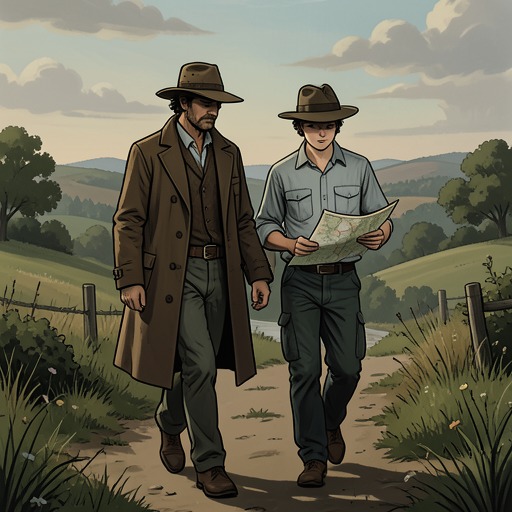
The apple harvest is nearly over when Ben calls the Job Services Office in Wenatchee to find picking work for Emilio. The job specialist explains that agricultural jobs are short-lived and that the remaining harvest will be finished within days. Ben nevertheless goes to the Wolfhound Orchard. There, contractor Lyle Parmenter studies Emilio's worn employment card and Ben's identification before asking whether Ben has picked apples. When Parmenter warns that the work is harder than it looks and meant for a younger man, Ben answers that he knows how to do it properly. His age is not erased, but he presents experience as a qualification.
The search for work leads beyond the rows to the pickers' camp: cabins of graying plywood, a washhouse beside a creek, a deteriorating equipment shed, and trailers gathered in a dusty clearing. The facilities make visible the living arrangements behind the harvest, while the short remaining season places a limit on the opportunity Ben is trying to secure. Apple picking here is neither pastoral backdrop nor a simple image of abundance. It is skilled, strenuous, time-limited labor, shaped by the crop's schedule and by workers' need to follow it. Across Ben's memories and present encounters, harvest joins family work, seasonal migration, and his effort to help Emilio find a place in the labor that still sustains the orchard country.